Choosing between GLM-5 and Claude Opus 4.6 is less about a single leaderboard score and more about matching model economics and reliability to your production workload. This guide consolidates official data points and translates them into a deployable selection framework.
Data snapshot: 2026-02-12 (UTC). Numbers and availability can change. Confirm in your own console before launch.
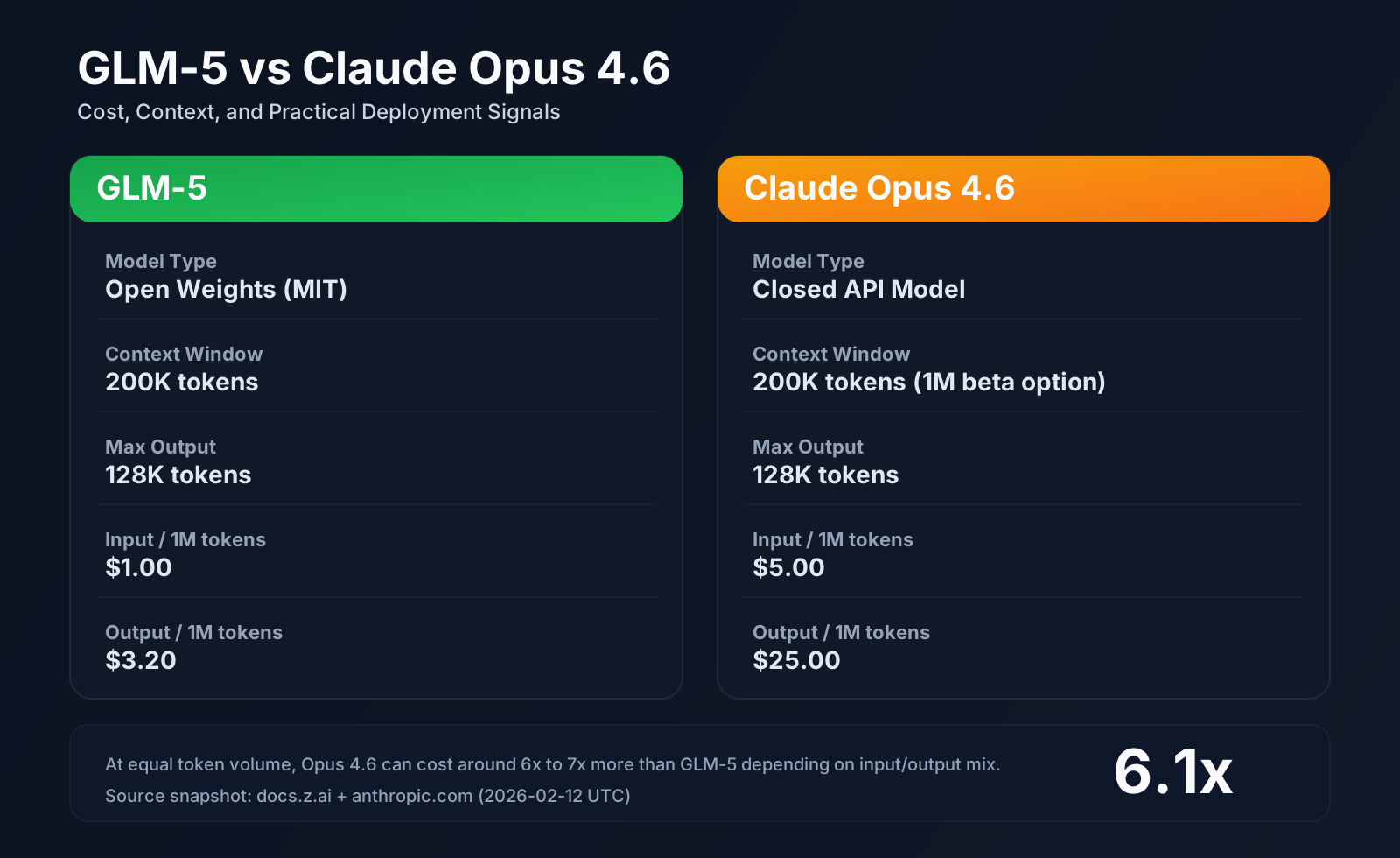
TL;DR
- Pick GLM-5 first if your priority is cost efficiency and deployment control.
- Pick Opus 4.6 first if your priority is top closed-model coding performance.
- If you need context beyond 200K, Opus 4.6 offers a 1M context beta path.
- In most mature systems, the best outcome is tiered routing instead of single-model lock-in.
Core specs side by side
| Dimension | GLM-5 | Claude Opus 4.6 | Practical impact |
|---|---|---|---|
| Model openness | Open weights (MIT) | Closed API | GLM-5 is easier for private/self-hosted control paths |
| Context window | 200K | 200K (1M beta available) | Opus has a higher ceiling for ultra-long tasks |
| Max output | 128K | 128K | Both can support long-form outputs |
| Input price (per 1M tokens) | $1.00 | $5.00 | Opus input is 5x GLM-5 |
| Output price (per 1M tokens) | $3.20 | $25.00 | Opus output is 7.8x GLM-5 |
| API integration | OpenAI-compatible endpoint | Anthropic Messages API | Both fit production agent workflows |
Benchmark signals (and how to read them)
| Benchmark | GLM-5 (public) | Opus 4.6 (public) | Caveat |
|---|---|---|---|
| SWE-bench Verified | 77.8 | 81.42 | Opus number uses Anthropic's 25-trial average with prompt modification |
| Terminal-Bench 2.0 | 56.2 | Reported as leading | Opus announcement highlights top result, but no single public score table |
| MCP-Atlas (High Effort) | 67.8 | 62.7 | Configurations differ; do not treat as strict apples-to-apples |
| BrowseComp (Multi-Agent) | Strong in GLM official charts | 86.8 | Opus number is from Anthropic's published setup |
Treat these as directional indicators, not procurement-grade proof. For production decisions, run your own task set and compare under identical constraints.
Cost model example
Unit pricing (per 1M tokens):
GLM-5: $1.00 input, $3.20 outputOpus 4.6: $5.00 input, $25.00 output
If your monthly workload is 300M input + 60M output:
- GLM-5 cost:
300 * 1 + 60 * 3.2 = $492 - Opus 4.6 cost:
300 * 5 + 60 * 25 = $3000
At the same volume, Opus 4.6 is about 6.1x the cost. That can be worth it for high-value tasks, but it should be justified with measured quality lift.
Deployment strategy that works
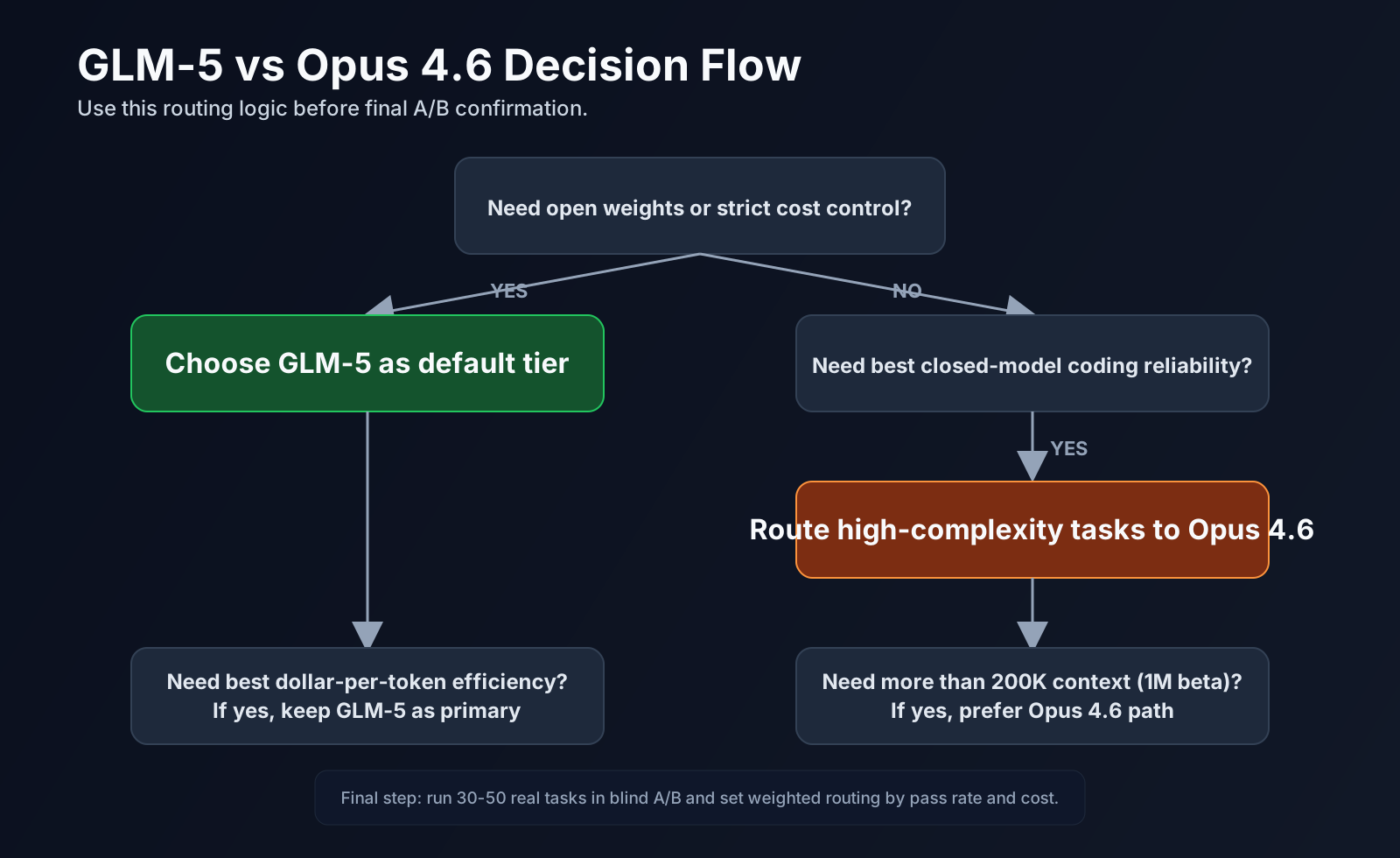
For most teams, a two-tier architecture performs better than one-model standardization:
- Default tier: GLM-5 handles high-volume, routine requests.
- Escalation tier: Route to Opus 4.6 for high-complexity, high-stakes tasks.
Useful escalation triggers:
- Multiple failed attempts on patch/test cycles
- Cross-repo refactors with deep dependency reasoning
- High-risk operations requiring maximum first-pass reliability
7-day evaluation plan
- Build a shared gateway for both models with consistent logging.
- Curate 30 to 50 real tasks from your own workflow.
- Run blinded A/B tests with identical toolchains and retry rules.
- Measure pass rate, retry count, P95 latency, and cost per successful task.
- Deploy weighted routing based on actual traffic mix and monitor weekly.